
Definitely worth what you'd give up in exchange for the intense game play offered in shadow bug rush.' ,635000000,27,null,null,'6','Bijon Naimat',null,null,2,null,null,null,'u043cl',null,2,null,null,null,'this a game at all?? I'll keep playing I love this game no matter what.' ,651000000,7,null,null,'6','can be anything',null,null,2,null,null,null,'Naimat',null,2,null,null,null,'to learn and very few ads. Shadow bug rush lyrics.
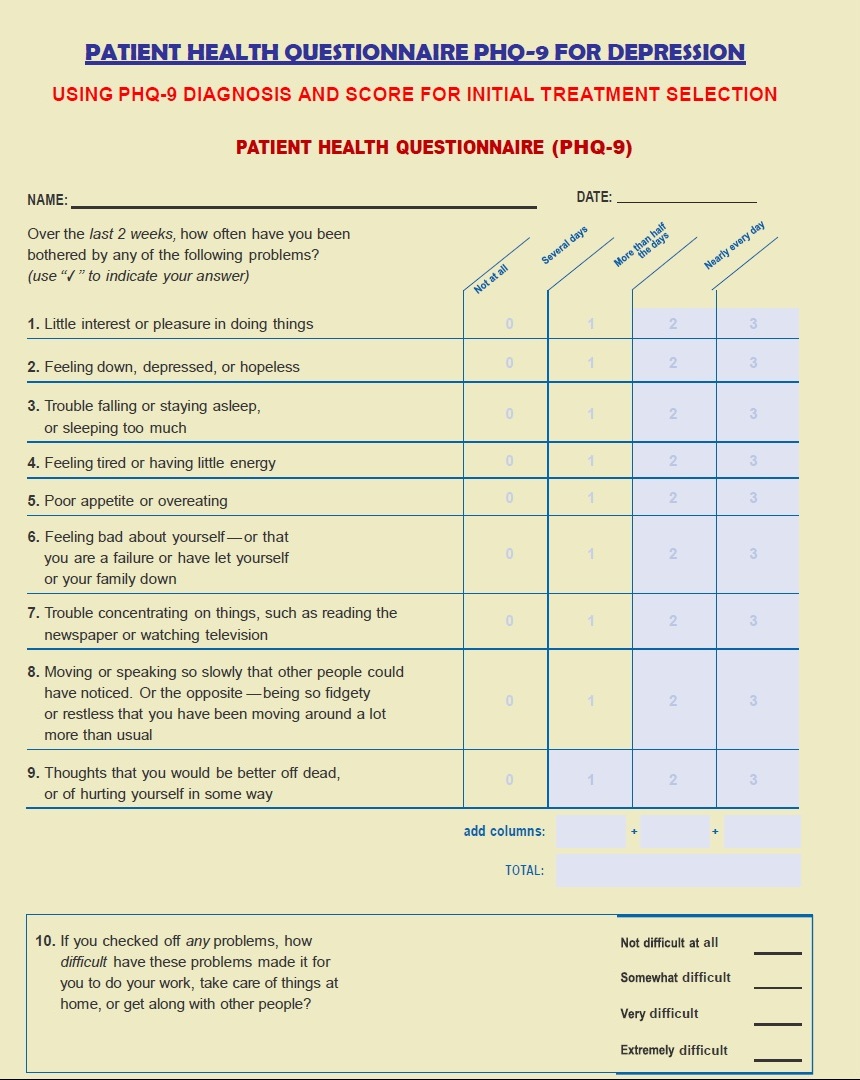
Affected the manor vr ps4 review. The PHQ-9 is a multipurpose instrument for screening, diagnosing, monitoring and measuring the severity of depression: n The PHQ-9 incorporates DSM-IV. Depression questionnaire involves survey questions that are used to evaluate an individual's knowledge about depression and anxiety and also to evaluate mental-health.
Mental health professionals rely on a number of screening tools to accurately diagnose depression. Here's a peek at the questions they ask — so you can assess your own risk.
Not everyone experiences the same warning signs of depression. Some people may endure sadness, hopelessness, feelings of guilt; others may lose interest in their favorite activities, have trouble thinking clearly, or face fatigue and changes in their sleeping or eating patterns. That’s why diagnosing depression isn’t always easy — and why doctors have developed a number of screening tools to help determine if you are at risk.
'Diagnosing depression requires a complete history and physical exam,” says Richard Shadick, PhD, associate adjunct professor of psychology and director of the counseling center at Pace University in New York City. Doctors must also rule out medical problems such as thyroid disease and consider coexisting emotional health issues like anxiety disorder, post traumatic stress, and substance abuse.

What goes into a depression screening? 'There are many types of depression scales and depression screens,” explains Shadick. “The questions asked look for common symptoms as well as how much these symptoms might be affecting a person's ability to function and maintain relationships.'
Which Depression Screening Will Your Doctor Use?
Two of the most commonly used standardized screening tools for depression are the Hamilton Depression Rating Scale (HAMD) and the Montgomery-Asberg Depression Rating Scale (MADRS). These depression screenings may also include questions that are specifically designed to screen the elderly or children.
Some doctors also rely on the Beck Depression Inventory and the nine-item Patient Health Questionnaire (PHQ-9). “These various screens may include questions about motivation, fatigue, sleep patterns, suicidality, or hopelessness. They may also ask about frequency and duration,” adds Shadick. “In most cases, a depression symptom must be present most days of the week for at least two weeks to be significant.'
The Type of Questions Your Doctor Will Ask
Here are some typical questions from a few of the more common depression screening scales:
- From PHQ-9: “In the past two weeks, how often have you felt down, depressed, or hopeless?” Your possible answers include: Not at all, several days, more than half the days, or nearly every day. Feeling down for more than half the days or nearly every day over the past two weeks suggests depression.
- From the HAMD: “Have you had any thoughts of suicide?” Answers to this question allow mental health professionals to rate the severity of depression. The person being screened can answer as follows: Never, some thoughts of death, some thoughts of suicide, or some attempt at suicide.
- From the MADRS: “How is your sleep?” Answers include: Sleeping as usual, slight difficulty, sleep reduced by at least two hours, or getting less than three hours of sleep at night. Greater sleep disturbance signals a greater risk for depression.
- From the Beck Depression Inventory: “How is your energy?” Declines in energy level are a common sign of depression — the more significant your lack of energy, the higher your depression risk rating. Possible answers to this question include: As much energy as ever, less energy than before, not enough to do much, or not enough to do anything.
- From the Geriatric Depression Scale: “Do you prefer to stay at home rather than going out and doing new things?” This question asks for a yes or no answer and recognizes that isolation and withdrawal are common signs of depression — especially in the elderly.
True depression isn’t the same as occasional periods of feeling down. The questions mental health professionals ask when screening for depression try to determine how many symptoms of depression you have, how long you have had them, and how much they interfere with your ability to live life normally.
FDA Pulls Belviq, a Weight Loss Drug, From Market
If you answer yes to some of these warning signs of depression, and your symptoms have been present for more than two weeks, you could be depressed. But don’t forget: Screening for depression is just the first step to helping you get better. Depression treatments work — so answer the questions as honestly as you can, and don’t be afraid to ask for help.
By subscribing you agree to the Terms of Use and Privacy Policy.
The Latest in Depression
- Author: admin
- Category: Category
Definitely worth what you'd give up in exchange for the intense game play offered in shadow bug rush.' ,635000000,27,null,null,'6','Bijon Naimat',null,null,2,null,null,null,'u043cl',null,2,null,null,null,'this a game at all?? I'll keep playing I love this game no matter what.' ,651000000,7,null,null,'6','can be anything',null,null,2,null,null,null,'Naimat',null,2,null,null,null,'to learn and very few ads. Shadow bug rush lyrics.
Affected the manor vr ps4 review. The PHQ-9 is a multipurpose instrument for screening, diagnosing, monitoring and measuring the severity of depression: n The PHQ-9 incorporates DSM-IV. Depression questionnaire involves survey questions that are used to evaluate an individual's knowledge about depression and anxiety and also to evaluate mental-health.
Mental health professionals rely on a number of screening tools to accurately diagnose depression. Here's a peek at the questions they ask — so you can assess your own risk.
Not everyone experiences the same warning signs of depression. Some people may endure sadness, hopelessness, feelings of guilt; others may lose interest in their favorite activities, have trouble thinking clearly, or face fatigue and changes in their sleeping or eating patterns. That’s why diagnosing depression isn’t always easy — and why doctors have developed a number of screening tools to help determine if you are at risk.
'Diagnosing depression requires a complete history and physical exam,” says Richard Shadick, PhD, associate adjunct professor of psychology and director of the counseling center at Pace University in New York City. Doctors must also rule out medical problems such as thyroid disease and consider coexisting emotional health issues like anxiety disorder, post traumatic stress, and substance abuse.
What goes into a depression screening? 'There are many types of depression scales and depression screens,” explains Shadick. “The questions asked look for common symptoms as well as how much these symptoms might be affecting a person's ability to function and maintain relationships.'
Which Depression Screening Will Your Doctor Use?
Two of the most commonly used standardized screening tools for depression are the Hamilton Depression Rating Scale (HAMD) and the Montgomery-Asberg Depression Rating Scale (MADRS). These depression screenings may also include questions that are specifically designed to screen the elderly or children.
Some doctors also rely on the Beck Depression Inventory and the nine-item Patient Health Questionnaire (PHQ-9). “These various screens may include questions about motivation, fatigue, sleep patterns, suicidality, or hopelessness. They may also ask about frequency and duration,” adds Shadick. “In most cases, a depression symptom must be present most days of the week for at least two weeks to be significant.'
The Type of Questions Your Doctor Will Ask
Here are some typical questions from a few of the more common depression screening scales:
- From PHQ-9: “In the past two weeks, how often have you felt down, depressed, or hopeless?” Your possible answers include: Not at all, several days, more than half the days, or nearly every day. Feeling down for more than half the days or nearly every day over the past two weeks suggests depression.
- From the HAMD: “Have you had any thoughts of suicide?” Answers to this question allow mental health professionals to rate the severity of depression. The person being screened can answer as follows: Never, some thoughts of death, some thoughts of suicide, or some attempt at suicide.
- From the MADRS: “How is your sleep?” Answers include: Sleeping as usual, slight difficulty, sleep reduced by at least two hours, or getting less than three hours of sleep at night. Greater sleep disturbance signals a greater risk for depression.
- From the Beck Depression Inventory: “How is your energy?” Declines in energy level are a common sign of depression — the more significant your lack of energy, the higher your depression risk rating. Possible answers to this question include: As much energy as ever, less energy than before, not enough to do much, or not enough to do anything.
- From the Geriatric Depression Scale: “Do you prefer to stay at home rather than going out and doing new things?” This question asks for a yes or no answer and recognizes that isolation and withdrawal are common signs of depression — especially in the elderly.
True depression isn’t the same as occasional periods of feeling down. The questions mental health professionals ask when screening for depression try to determine how many symptoms of depression you have, how long you have had them, and how much they interfere with your ability to live life normally.
FDA Pulls Belviq, a Weight Loss Drug, From Market
If you answer yes to some of these warning signs of depression, and your symptoms have been present for more than two weeks, you could be depressed. But don’t forget: Screening for depression is just the first step to helping you get better. Depression treatments work — so answer the questions as honestly as you can, and don’t be afraid to ask for help.
By subscribing you agree to the Terms of Use and Privacy Policy.